
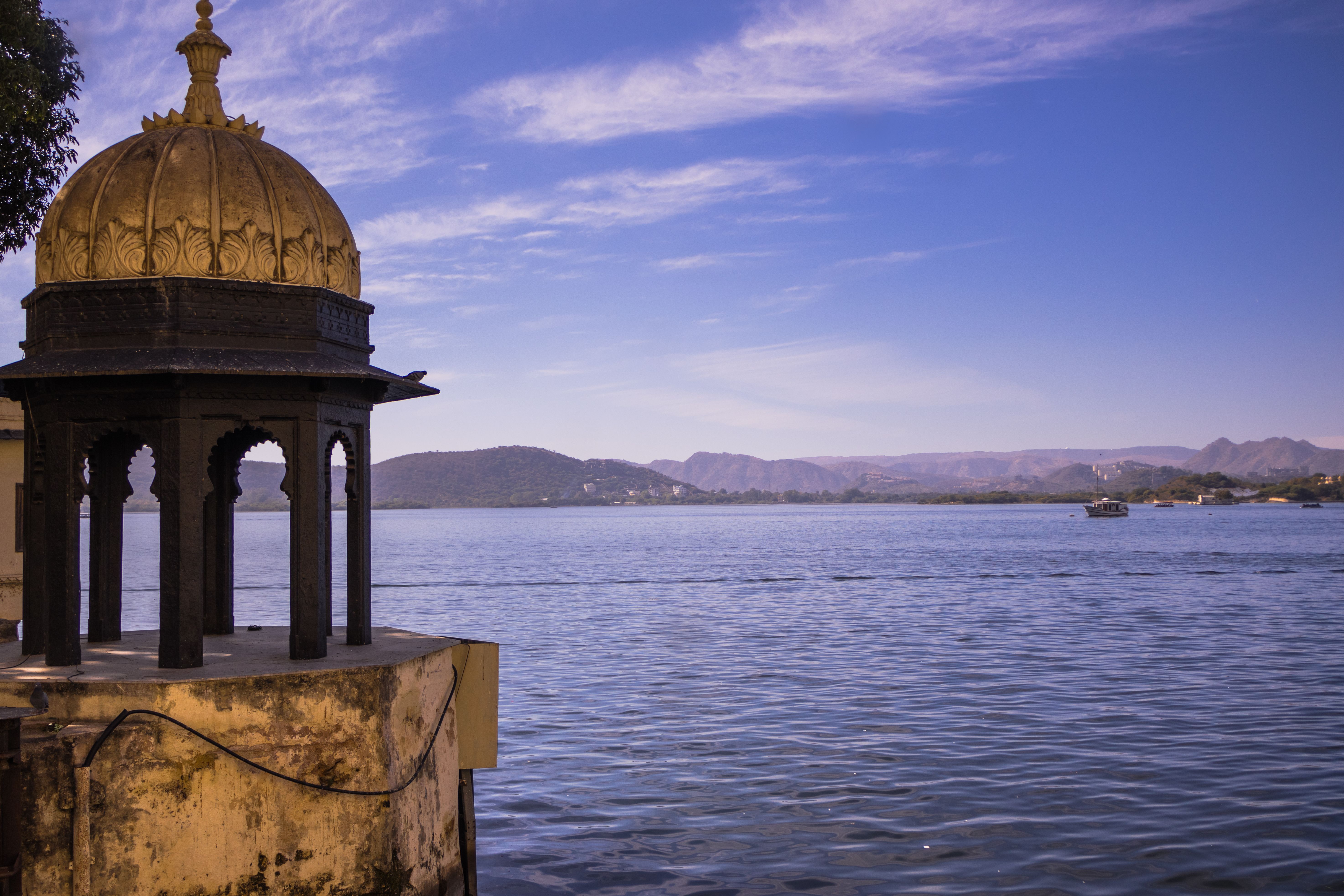
Nestled in the heart of Udaipur, the City of Lakes, Lake Pichola is an artificial freshwater lake that has been the lifeblood of the Mewar kingdom for over six centuries. With its shimmering waters reflecting the grand palaces, ancient ghats, and the surrounding Aravalli hills, this iconic lake transforms with every passing hour — from the golden glow of dawn to the fiery spectacle of sunset, when the water becomes a mirror of the sky and every ripple seems to carry the echoes of Mewar's glorious past.
The story of Lake Pichola begins in the year 1362 AD, when a humble but visionary Banjara trader named Pichhu Banjara constructed a small earthen dam across a natural depression in the Aravalli terrain to meet the drinking and irrigation needs of the local populace. This act of practical ingenuity took place during the reign of Maharana Lakha Singh, the fifty-second ruler of the Mewar dynasty, and it is from Pichhu Banjara that the lake derives its enduring name. What began as a modest water conservation effort would eventually become the most celebrated lake in Rajasthan.
Nearly two centuries later, in the year 1559, Maharana Udai Singh II, the founder of Udaipur, recognized the immense potential of this water body and undertook a massive expansion of the lake. He constructed a stronger stone masonry dam at a place known as Badi Pol, significantly increasing the lake's capacity and surface area. This expansion was part of a grander vision — the Maharana was establishing his new capital of Udaipur after the fall of Chittorgarh to Mughal forces, and he wanted a city that would be as beautiful as it was defensible, with Lake Pichola as its shimmering centerpiece.
Over the centuries that followed, successive Maharanas of Mewar embellished the lake's shores with magnificent palaces, temples, and bathing ghats, turning a functional reservoir into one of the most picturesque urban lakes in the world. The lake became not merely a source of water but the very soul of Udaipur, a reflecting pool for the architectural grandeur of the Mewar rulers and a stage for the rituals, festivals, and daily life of the city's inhabitants.
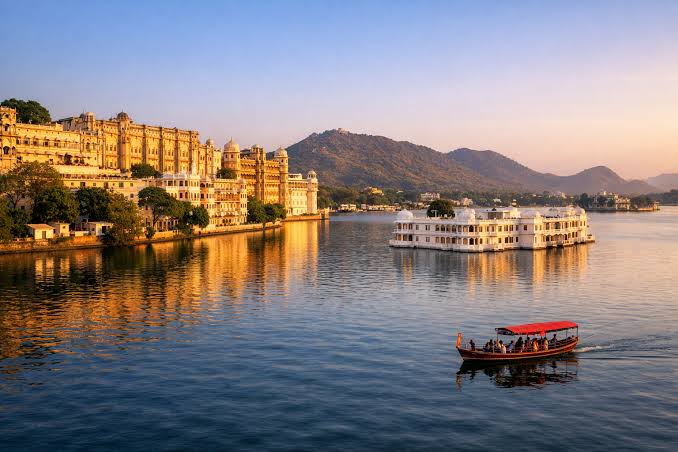
The most enchanting feature of Lake Pichola is undoubtedly its two world-famous island palaces, which appear to float like mirages upon the lake's placid surface. Jag Niwas, better known as the Lake Palace or Taj Lake Palace, is the smaller of the two islands and is home to one of the most romantic hotels on the planet. Built by Maharana Jagat Singh II between 1743 and 1746, this exquisite white marble palace covers the entire island and seems to rise directly from the water, its domes and cusped arches reflected perfectly in the lake below. Today operated by the Taj Group, it remains the most iconic image of Udaipur and one of the most photographed heritage hotels in the world.
The second island palace, Jag Mandir, is larger and holds an equally fascinating place in Mewar history. Construction of Jag Mandir began during the reign of Maharana Karan Singh in 1551 and was completed by Maharana Jagat Singh I in the early seventeenth century. The palace served as a refuge for Prince Khurram, the future Mughal Emperor Shah Jahan, when he rebelled against his father Emperor Jahangir in 1623. It is said that the beauty of Jag Mandir's gardens and architecture deeply inspired the young prince, and some historians believe that its elegant marble pavilions and meticulous craftsmanship influenced the design of the Taj Mahal.
Both island palaces are accessible only by boat, which adds to their otherworldly charm. As your boat glides across the lake toward these floating marvels, the palaces seem to grow from the water itself, their white marble facades glowing gold in the evening light. The experience of approaching Jag Niwas or Jag Mandir by water is one that visitors never forget — it is like entering a fairy tale crafted in stone and water by the visionary rulers of Mewar.
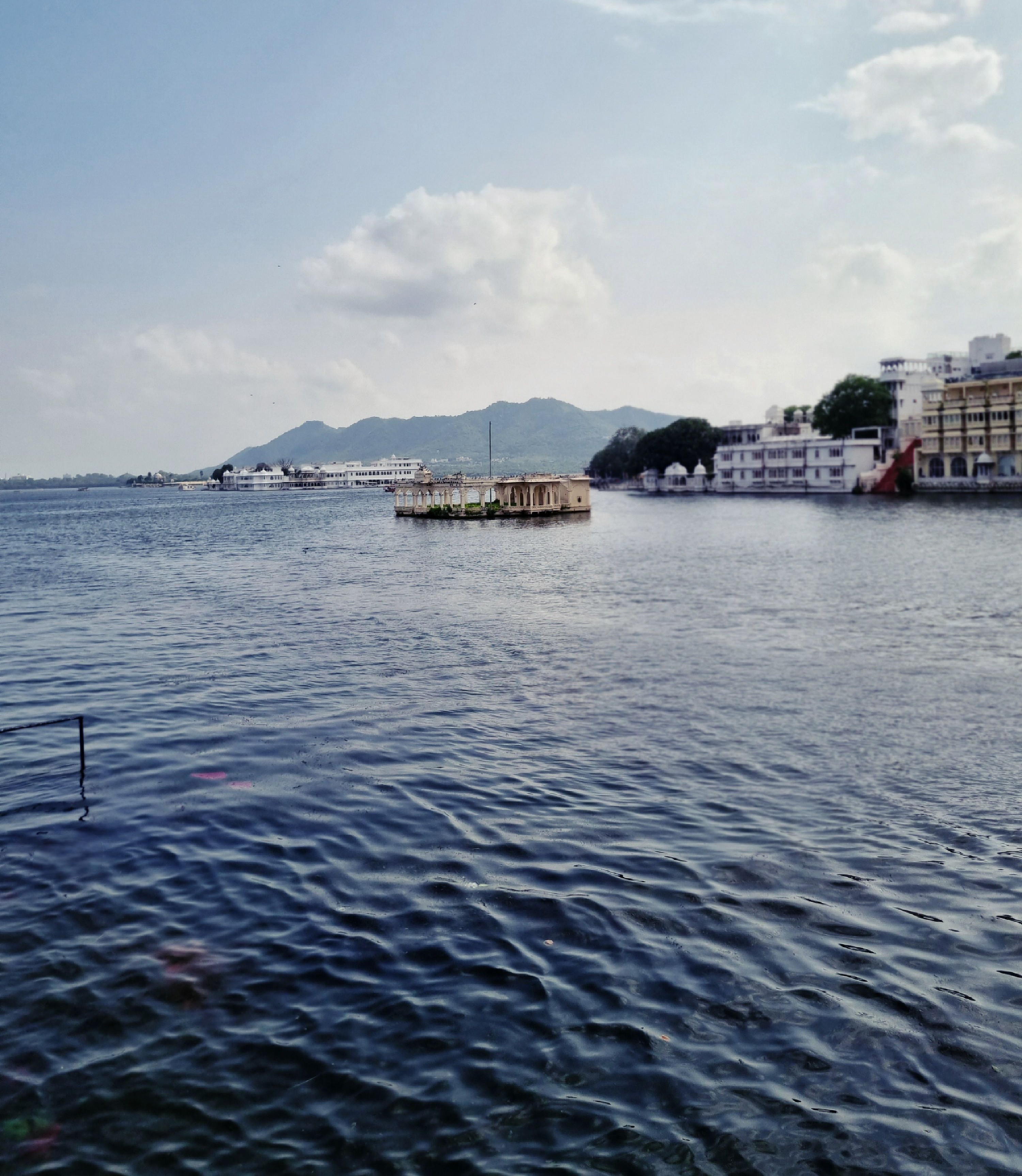
The eastern and northern banks of Lake Pichola are lined with a series of historic ghats — stone steps leading down to the water's edge — that have served as the social, religious, and cultural heart of Udaipur for centuries. Lal Ghat, one of the most prominent, is a bustling waterfront where locals gather for their morning rituals and where the sounds of temple bells and chanting create an atmosphere of timeless devotion. The ghat comes alive especially during the Gangaur Festival, when processions of beautifully adorned idols of Gauri and Isar are carried to the lake in a spectacular celebration of marital fidelity and Mewar tradition.
Gangaur Ghat, perhaps the most photogenic of them all, sits directly across from the Lake Palace and offers what many consider the finest vantage point in all of Udaipur. From here, the white marble of Jag Nivas seems to float impossibly on the water, framed by the arched windows of the old city havelis that rise behind the ghat. At dawn, the ghat is a scene of quiet beauty as women in vibrant saris perform their prayers and children play along the water's edge, while at dusk it transforms into a romantic promenade where visitors and locals alike gather to watch the legendary Udaipur sunset.
Ambrai Ghat, located on the southern bank near the Lake Palace Hotel, is the favored spot for photographers and sunset seekers. It offers an unobstructed, panoramic view of the lake with both Jag Niwas and Jag Mandir in the foreground and the City Palace and its towering crest rising magnificently on the eastern shore. The ghat is also a popular departure point for boat rides, and the gentle lapping of water against the stone steps creates a meditative soundtrack that has enchanted visitors since the days of the Maharanas.

Stay at Vega and set sail on the most iconic sunset boat ride in Udaipur — just minutes from the lake's shimmering shores.
Book Your StayGet Insider Tips, Exclusive Member Offers & Travel Inspiration for Udaipur delivered straight to your inbox.